

All photos from the 2023 Kate Edger Trust Awards Ceremony are available to view and download for free
thanks to Timeless Images Photography
View the 2023 Awards Ceremony photo gallery here
September 4, 2023
All photos from the 2023 Kate Edger Trust Awards Ceremony are available to view and download for free
thanks to Timeless Images Photography
View the 2023 Awards Ceremony photo gallery here
June 7, 2023
Mr. Ellis Coxon graduated in Chemistry from the University of Durham in 1983 and became a qualified secondary school teacher in 1984. His first teaching assignment involved instructing Chemistry to 300 students aged 11 to 16, some of who were classes of students with special needs.
The UK education system at that time had no special education policies in place and teaching a theoretical subject to students who struggled with basic literacy skills proved challenging. He describes how their lack of engagement led to them “taking great delight in misusing the acid , glass and fire involved in any practical work”. The difficulties he encountered in this stressful and under resourced classroom environment took a toll on Mr. Coxon’s mental health, resulting in him eventually leaving the teaching profession altogether.
While employed in the Civil Service during the early 1990s, Mr. Coxon happened upon a special needs school nearby. He subsequently spent the following two years volunteering during his extended lunch breaks, working with young adults facing severe and profound learning difficulties. This experience reignited his desire to return to teaching and he completed a Master’s degree in Special Education.
Although obtaining his Master’s degree was a significant accomplishment, once back classroom teaching full time, Mr. Coxon found the bureaucratic focus on why the students didn’t conform to an existing curriculum overshadowed the ability to treat each student as an individual with unique needs.
Ultimately, Mr. Coxon found fulfillment as Chemistry tutor, providing personalised instruction to students on a one-on-one basis in their homes. He retired from full time work in 2016 to care for his elderly mother until her passing in 2021.
As a long-time admirer of the beautiful singing voice of Hayley Westenra, Mr. Coxon discovered that she was a patron of the Raukatauri Music Therapy Trust in Auckland, NZ. Learning more about the work of the Trust and the shortage of music therapy teachers, he knew he wanted to help. These discussions led to Mr Coxon sponsoring a second Master of Music Therapy award in partnership with The Kate Edger Trust and The Raukatari Music Therapy Trust.
It is very fitting that the recipient of his award Sarah Byrne, has a teaching background and has come to Music Therapy through her recognition of the power of music in the classroom environment to support children with emotional and behavioral issues.
Both the Kate Edger Trust and Raukatauri Music Therapy Trust are very grateful to Mr Coxon for his generous donation towards Sarah’s music therapy career and the people she will ultimately help.
June 6, 2023
MusicHelps is a registered New Zealand charity governed by a board of music loving professionals who lend their expertise and passion to the cause.
They also provide emergency assistance to thousands of music people experiencing hardship and illness through our suite of music support services, including a world first, professional online, on-the-phone and face-to-face counselling service tailored to people who make music possible.
Collaborating with the Raukatauri Music Therapy Trust (RMTT) and The Kate Edger Trust to create a special award to support the growth of music therapy practitioners in Aotearoa New Zealand was an obvious partnership for the charity.

This lineup includes NZ music royalty Neil Finn, Lorde, Joel Little and Don McGlashon.
They support hundreds of projects across New Zealand, each using the power of music to change the lives of thousands of New Zealanders in need. This includes music therapy, music programs in respite and palliative care, music education programs (particularly in low decile environments), music programs in prisons and rehabilitation and music in aged care to name but a few initiatives we support.
“Music therapy goes to the very heart of what we do at MusicHelps,” says Chair of MusicHelps, Anthony Healey (right) “The need for talented music therapists and the demand for music therapy is unprecedented, so to support and partner with the Raukatauri Music Therapy Trust and The Kate Edger Educational Charitable Trust like this is massive.”
RMTT Executive & Clinical Director, Jen Glover, and the Raukatauri Board, including co-founder Dame Hinewehi Mohi, are particularly excited to have MusicHelps join this growing list of funders given its strong connection to the music industry and ability to reach professional musicians who may be looking for another career pathway. In addition to the financial award, scholarship recipients are provided with a clinical placement and a pathway to employment with Raukatauri, a great source of stability for musicians who are often used to having to make their own way in the industry.
Applications for the award are open for full-time wāhine identifying students studying a Master of Music Therapy programme. The recipient of the award will receive an $8,000 scholarship for one year of study, and if they are in their second year of study, a supported student placement with the Raukatauri Music Therapy Trust.
Applications will open on August 1st 2023.
June 1, 2023

Student Music Therapist at the Raukatauri Music Therapy Trust & 2023 recipient of The KEECT Master of Music Therapy Award sponsored by Mr. Ellis Coxon & supported by The Raukatauri Music Therapy Trust.
Sarah is based in Tauranga in the Bay of Plenty and has started her second semester of the Master of Music Therapy Programme at Victoria University in Wellington. She will be working with the regional Bay of Plenty Raukatauri team during her placement.
Sarah grew up learning classical piano and enjoys working with a variety of instruments as well as voice. Alongside her music studies, Sarah has a post-graduate degree in primary teaching. As a teacher, she has experienced first hand the power of music in the classroom environment to support children with emotional and behavioural issues, and is is especially passionate about the ability of music to improve the wellbeing/hauora of our tamariki.
Having worked in a number of community-focused organisations previously, Sarah believes music therapy has a special role to play in supporting self-expression and identity building for people of all ages and backgrounds. She hopes through her connections with the teaching and music communities in her area to be able to expand the role of music therapy in schools.
Outside of music therapy, Sarah enjoys spending time with her family, reading and exploring the wonderful nature of New Zealand.
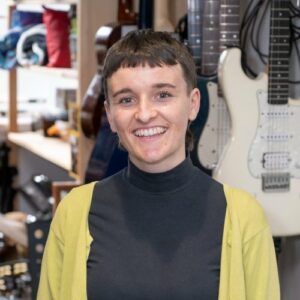 Sinead Hegarty
Student Music Therapist at the Raukatauri Music Therapy Trust & 2023 recipient of The KEECT Master of Music Therapy Award sponsored by the Gattung Foundation & supported by The Raukatauri Music Therapy Trust.
Sinead lives in the Hawkes Bay and is in her final year studying for a Master of Music Therapy degree at Victoria University. This scholarship comes with a monetary award of $8,000 and a minimum 750 hour placement with the Raukatauri Music Therapy Trust. Sinead has chosen a highly important topic for her Masters research, based around how music therapy might be used to support community wellbeing during times of high stress and instability. We are thrilled to support Sinead’s journey towards a career in music therapy.
“I am beyond grateful to be selected as a recipient, I am excited and privileged to be able to carry out my final year of Masters research and placement in my home town. Due to the impact Cyclone Gabrielle has had on Hawkes bay, I am interested in looking at the role of music therapy in building and strengthening communities significantly impacted. I am particularly interested in trauma-informed, community based and bicultural ways of working. Through my placement with Raukatauri and support from this scholarship I hope to deepen my understanding of my emerging practice and develop an authentic way of working as a music therapist to support individuals and communities to access inner resources and tools to support healing and wellbeing. I feel empowered and well supported by this scholarship and the inspiring team at Raukatauri Music Therapy Trust.” Sinead
Sinead’s musical background is predominantly in guitar, singing and song writing, having completed a diploma of music from Hawkes Bay’s Eastern institute of technology. Sinead enjoys the relational aspects of music and aims to develop a practice that facilitates safe and inclusive spaces for people to experience a genuine sense of belonging.
Through her study so far, Sinead has experience working with adults with intellectual disability and adults and adolescents experiencing complex mental health challenges.
Before studying music therapy, Sinead completed a bachelor of science in genetics at Otago and afterwards travelled overseas, living in Spain and Morocco. Sinead has a deep respect for non-western world views and believes in the importance of inter-cultural dialogue. Sinead hopes to continue developing cultural competency through her placement and professional development with Raukatauri.
December 20, 2022
We are thrilled to announce a new award “The KEECT Master of Music Therapy Award” sponsored by Gattung Foundation and supported by the Raukatauri Music Therapy Trust (RMTT). The purpose of the award is to improve diversity within the music therapy profession by opening doors for Māori and Pasifika women.
Music Therapy is the planned use of music to assist in the healing and growth of people with emotional, intellectual, physical or social challenges. A career in Music Therapy offers challenge, opportunity, and distinctive rewards to those with a strong musical background interested in working with people of all ages with various disabilities. Music therapists have extensive training in music, psychology and human development.
The recipient of The KEECT Master of Music Therapy Award will receive $8,000 for one year of full-time study, and if they are in their second year of study, it will also include a minimum 750 hour placement with the Raukatauri Music Therapy Centre. Raukatauri is committed to supporting students on placement into employment and intends to extend that commitment to recipients of this award.
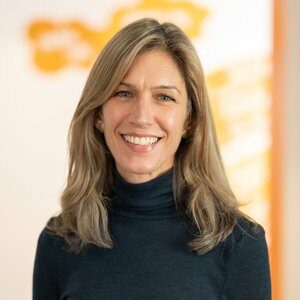 RMTT Clinical and Centre Director Jen Glover (left) said she has been disheartened by the lack of Māori music therapists working in Aotearoa.
“Our experience in expanding to areas such as the Far North and the Eastern Bay of Plenty in recent years has made it clear to us that there are passionate wāhine musicians living around the country who would make amazing music therapists if they could be supported in their studies,” she said.
“We’re confident that the award will make a real difference in increasing the diversity of our field, and improving access to music therapy services around the country.”
Gattung Foundation spokeswoman Angela Gattung (pictured below left with her sister and co-founder Theresa Gattung) said the foundation was born out of a shared spirit to enable others and make real change.
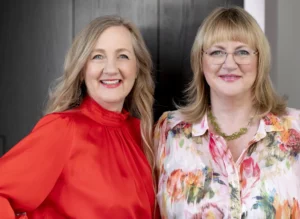 “We support causes that touch us deeply and make a tangible difference – especially for Māori and Pasifika women,” she said.
“The aim of the scholarship is to inspire Māori and Pasifika wāhine musicians to consider taking up a career in music therapy, filling the need for more music therapists, whilst increasing diversity in the profession.”
The Kate Edger Trust feels this award aligns beautifully with namesake Kate Edger’s own skill and passion for music. She was a gifted singer and played the piano and violin, performing publically at concerts with her siblings. Her own children were also noted for their ‘gifted musical abilities’.
Full-time wāhine students, preferably of Māori and Pasifika ethnicity, studying a Master of Music Therapy can apply for the scholarship.
Applications for the award close on January 31, 2023.
November 22, 2022
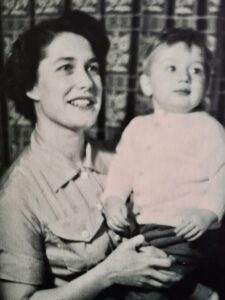 Born in Northampton, England in 1931 to a ‘lower middle-class family’, Sylvia Tredwell pictured aged 29 with her eldest son Stephen, followed the social norms of the time which included leaving school at 16 to work as a shorthand secretary and later giving up work when she married to become a homemaker and mother to her 3 children Stephen, Susan and Michael.
While Sylvia later went on to have a successful and rewarding administration career where she was highly regarded, her family has often wondered if she had been born into different circumstances with the opportunity to attend university and gain formally recognised qualifications, how much more she might have achieved in her career. They believe she would have most certainly ended up in a senior management role suited to her high level of intelligence and capability.
Sylvia’s return to the workforce and ensuing career began in 1973 when the young family emigrated to New Zealand and set up home in Hamilton. As the children were now all school-age, she worked in a number of administrative and reception roles for several years before the family moved back to Northampton in 1979.
Once back in England, Sylvia continued to work in administration, eventually ending up at British Gas where her common sense and no-nonsense approach to work and life prevailed over her lack of engineering experience and formal qualifications. Her time there culminated in her managing a large team of Gas Engineers and their workload – a role that would have required a high level of specialised knowledge that she had gained over the years.
Even after her retirement from British Gas in the 1990s, she continued to enjoy working part-time for many years as an exam invigilator at several nearby tertiary institutions, something which gave her enjoyment and a continued purpose.
When Sylvia died in 2013 aged 82 years, she left a legacy her family is very proud of. She displayed great resilience, tenacity, and an inherent level of practicality in her approach to her professional career and in overcoming the barriers and social preconceptions of the time.
It is with this in mind, that Sylvia’s family is offering the Women in Science Award in her memory so that someone else may be afforded the opportunities their mother didn’t, to pursue a career path of their choosing and reach their full potential.
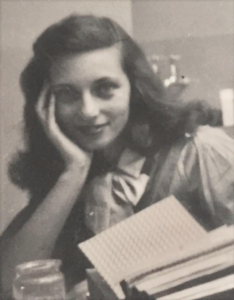 Elizabeth Crannigan was born in 1927 in Warr犀利士
ington Lancashire. Her parents were a WWI veteran and a housewife. Tragically, both parents had died by the time she was 10 years old, and she and her 3 brothers were raised by their spinster Aunt Clara who undoubtedly would have struggled with the responsibility of caring for 4 orphaned children.
The difficulties young Elizabeth Crannigan faced in her early life shaped her for a lifetime of wanting to make a difference in the lives of others, especially those who were marginalised in some way.
On finishing school, Elizabeth went to London to study Art. Her early art and design career included designing the artwork for well-known British chocolatiers Beeches Chocolates who recently celebrated over 100 years in business and for Sandersons, renowned wallpaper manufacturers.
In the late 1960’s, now a mother herself and with a passion for children and education, Elizabeth returned to study at Ilkley College of Further Education and gained a teaching qualification. She was a passionate and creative art and remedial English teacher with a natural talent for hands-on craftwork, no doubt inherited from her carpenter father.
Challenging the gender myths of the time, she went on to teach metalwork and woodwork, eventually becoming the Head of the Craft Department at Ilkley School. Mrs Crannigan used her classroom as an opportunity for students who struggled with mainstream subjects to discover their passion and strengths through creative work.
Outside the classroom, Mrs Crannigan continued to express her own creativity through watercolour painting and was an active and engaged member of the Ilkley Art Club. During a trip to New York, she was invited to exhibit later that year in Philadelphia where her watercolours exhibition was a great success. This was a special highlight in her artistic career.
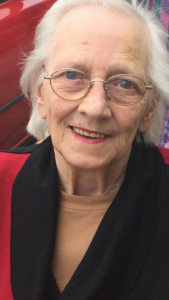 After her retirement from teaching, Mrs Crannigan enjoyed travelling and had many happy trips to The States, Australia and New Zealand to visit friends and family.
She was widowed in 1998 with the death of her husband Tony, and 8 years later experienced further untimely grief with the death of her son Nicholas from cancer. For someone who lost their parents at a very young age, to also lose a child seems very unjust. But Elizabeth Crannigan had a special resilience and fortitude that she is especially remembered for.
In 2016 she suffered a debilitating fall which she wasn’t expected to recover from and was taken to the Gables Nursing Home to be cared for in her ‘last weeks’. However, she confounded the experts by living and enjoying special times with her family for another 5 years before eventually passing away on September the 8th 2021.
The impact of education comes in many forms, including the teachers at school who leave a lasting imprint. Mrs Crannigan’s students will no doubt remember her as the teacher that made them feel seen and valued. She in turn greatly admired those students who, despite their difficult life circumstances, used her classroom to discover their creative passions, purpose and hands-on skills they could take with them in life.
It is with this in mind, that her daughter Margaret and family have chosen to honour her memory with a Kate Edger Trust Award recognising the resilience and achievement of a Kate Edger Awardee who has overcome adversity to achieve their education goals.
August 18, 2022

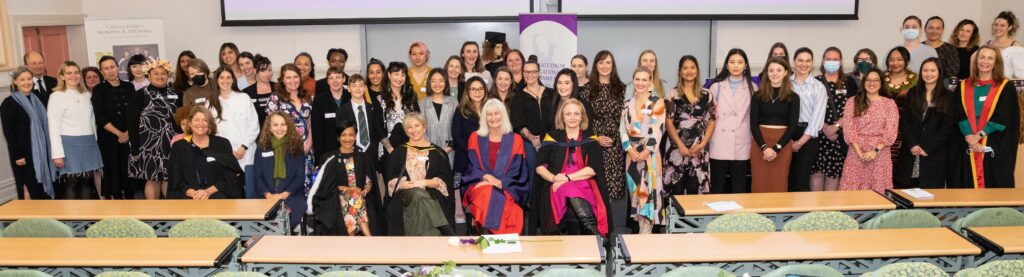
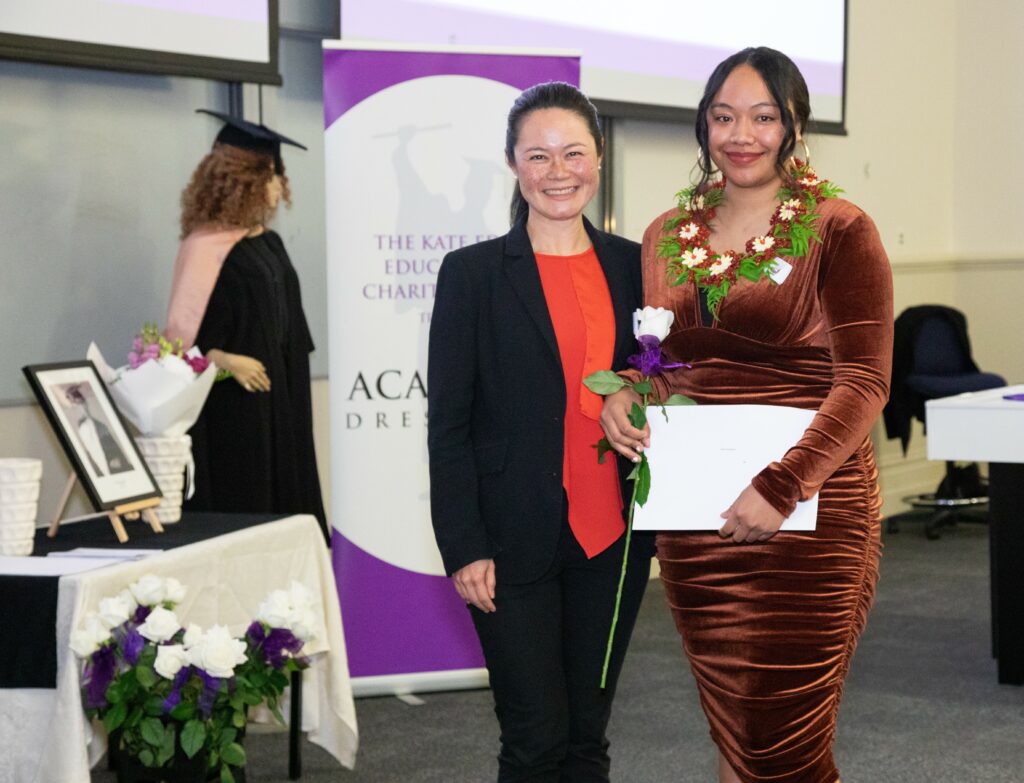
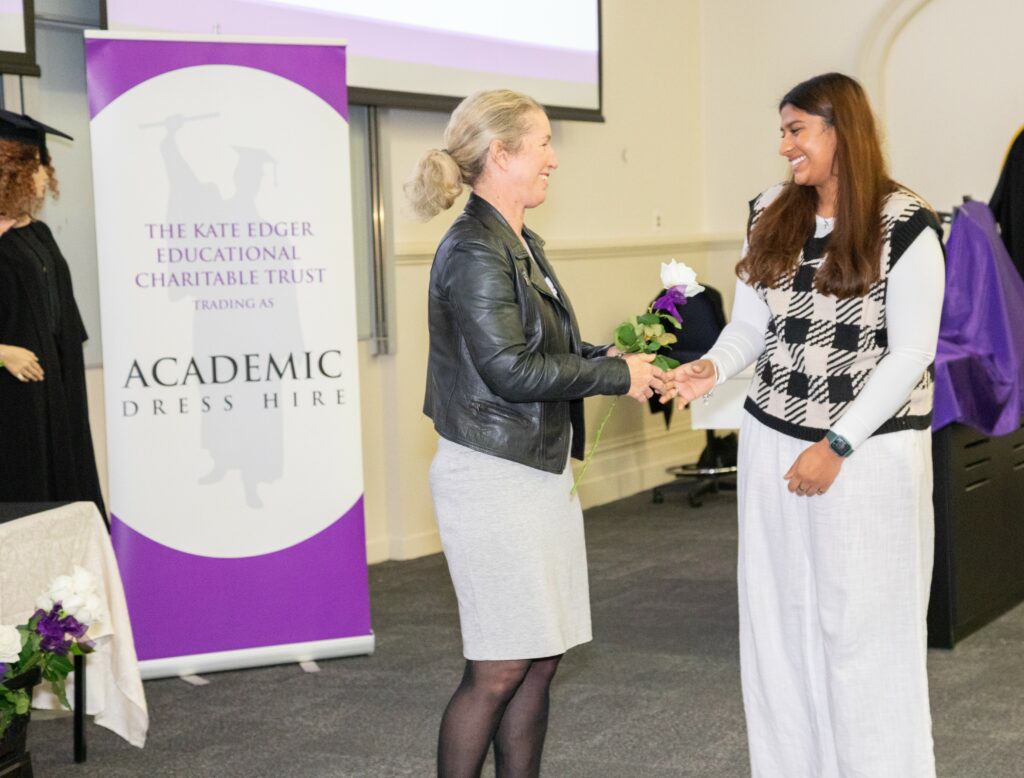
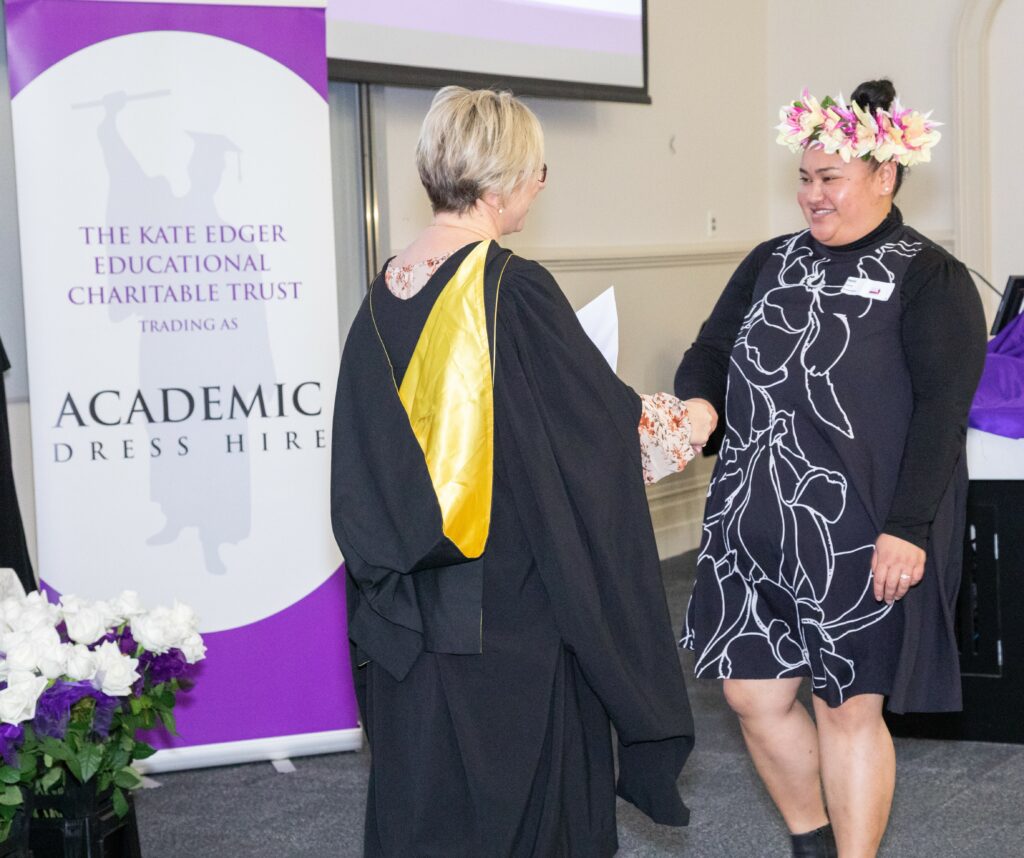
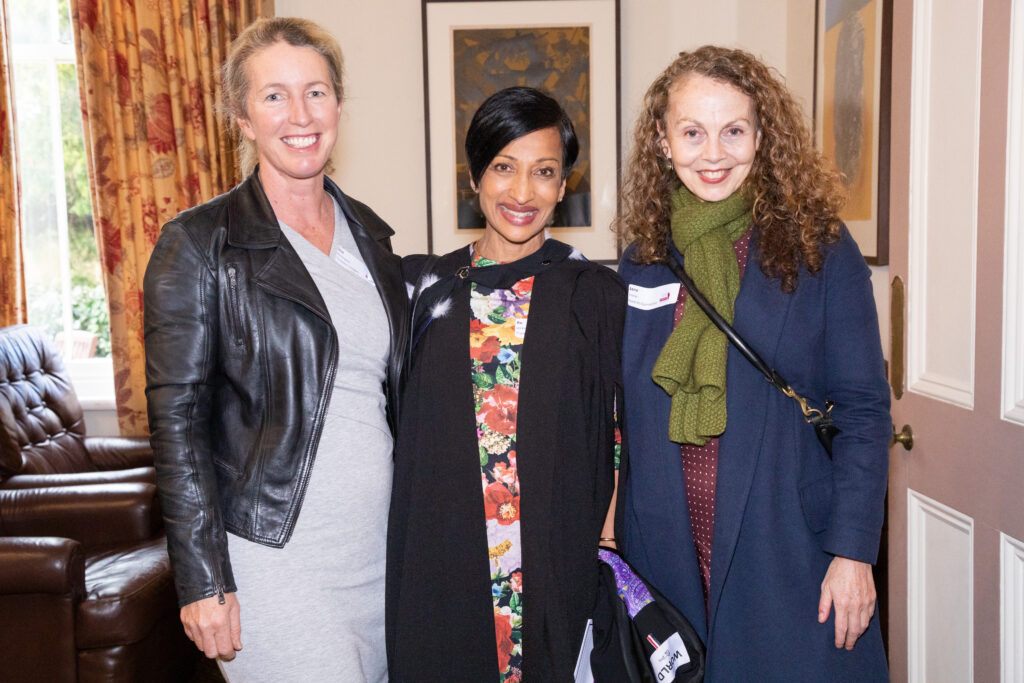
All photos from the 2022 Kate Edger Trust Awards Ceremony are available for free
thanks to Timeless Images Photography
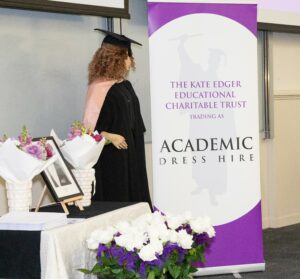
Special thanks to Scarecrow Florist for the beautiful white roses presented to the awardees
View the 2022 Awards Ceremony photo gallery here
July 13, 2022
Abridged from an article originally published by the Unitec Media Team, June 2022
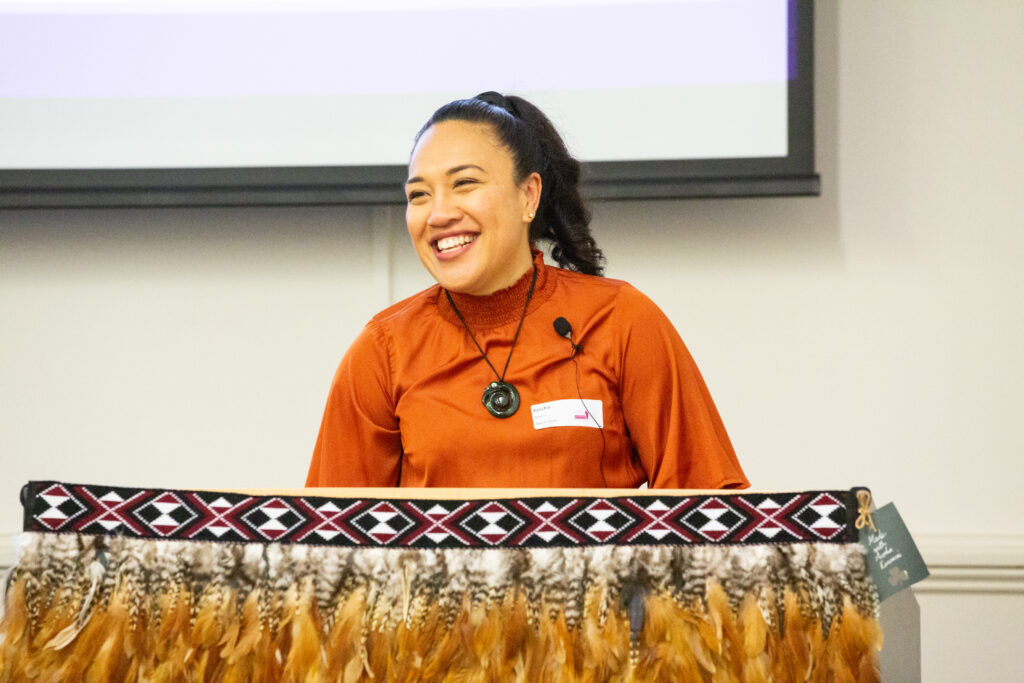
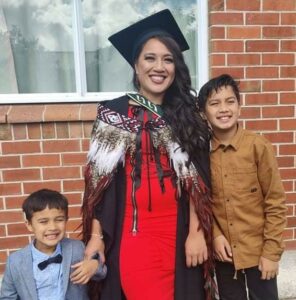 Bachelor of Architecture graduate and Ngā Wai A Te Tūī researcher Keisha Rawiri (Ngāti Hine, Ngāti Hāmoa) pictured on the left with her mother, has been awarded one of The KEECT Master’s Awards valued at $8000 to help fund her Master of Architecture (Professional) Project supporting the regeneration of the Tau Henare Marae in Te Taitokerau (Northland).
KEECT Awards Coordinator Katrina Ford says Keisha’s hard work and determination to succeed combined with dedication to her whānau and community epitomizes the values of the Trust. “What made her application special compared to the many other excellent applications is how her referees spoke about how Keisha supports her colleagues and fellow students, despite her many commitments. The application process for the Master’s Degree Awards is very competitive. This is the first time a student from Unitec has received one of our Master’s Awards, so we hope that Keisha’s success will encourage other Unitec students to apply.”
It is a significant milestone for Keisha, who took up her studies as a mature student to pursue her dream as a teenager of becoming an architect. She says that her interest sprang from a keen interest in art and having an analytical brain. “I figured architecture was a great way to put them together, but my high school didn’t have the resources or the programmes to support jumping into architecture at the time”.
After leaving school, she moved to Australia and ‘life happened’. She pursued a career in banking and finance for 8 years alongside having her family, before deciding it was time to finally follow her dream of becoming an architect.
“The KEECT were also part of my beginning architectural studies journey. In my first year, I applied to them for a scholarship to start my studies and was awarded a $2000 Tressa Thomas Retraining award, which assists mature women to retrain in a profession.”
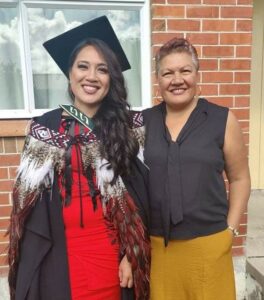 “One of the big things for me was that I was born and raised Samoan. I grew up with a solo mother who returned to study as a mature student. My mother modelled age should never be an obstacle to further education. I also grew up surrounded by my nana and grandpa, who were fluent in Samoan and ensured that my Samoan identity was strong. Unfortunately, I didn’t have an established relationship with my father, who is Māori. Then I had this reconnection with my whakapapa on his side that sprang from an internship with Matakohe Architecture and Urbanism in Whangārei during the second year of my Bachelor’s Degree”
Keisha’s Master’s project represents an extremely significant journey of connection on both a professional and personal level.
“Through the internship journey, I visited my marae and participated in their Waimā Waita Waiora wānanga, staying two nights. That was about caring for our wai and protecting the life of tuna (eel), which has a significant role in our hapū narratives. Through that, I connected with my extended whānau on my father’s side and that’s where my journey started. ”
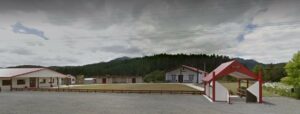
Through discussion with whānau, one of the aspirations that initiated the research project was to breathe life back into Ngā Tau e Toru, the original wharenui of Tau Henare marae built in 1893, before the larger Tau Henare whare tupuna was built in the mid-19th century.
For a long time, it housed the Kōhanga Reo, with koro and kuia sharing knowledge with mokopuna with te reo, but over the years natural wear and tear meant it became unsafe for whānau use. Eventually, it was disestablished as a functioning whare on the marae and now sits vacant and unutilised.
“As a research project, it is quite special because through the process of whakawhanaungatanga and as the researcher, because of my whakapapa connection, I share a strong relationship with the people and the place and further expresses the Kaupapa Māori lens the research project is adopting. For Māori, whakapapa, history, and cultural narratives are passed down and Ngā Tau e Toru is part of the marae history, a precious taonga. It is about the narrative”
Keisha hopes that her project will provide the vision and scope for the original wharenui to be brought back to life, bringing the history of Nga Tau e Toru forward rather than sitting unutilised.
“Tau Henare marae whānau will receive the final report as a koha – as a thank you for their time and contribution. The hope is that they can use it as a design advocacy report to support the marae’s current and future aspirations. It will include a visual representation of Ngā Tau e Toru’s regeneration where hapū were in the driver’s seat, leading the visioning, aspirations, and design development.”


